
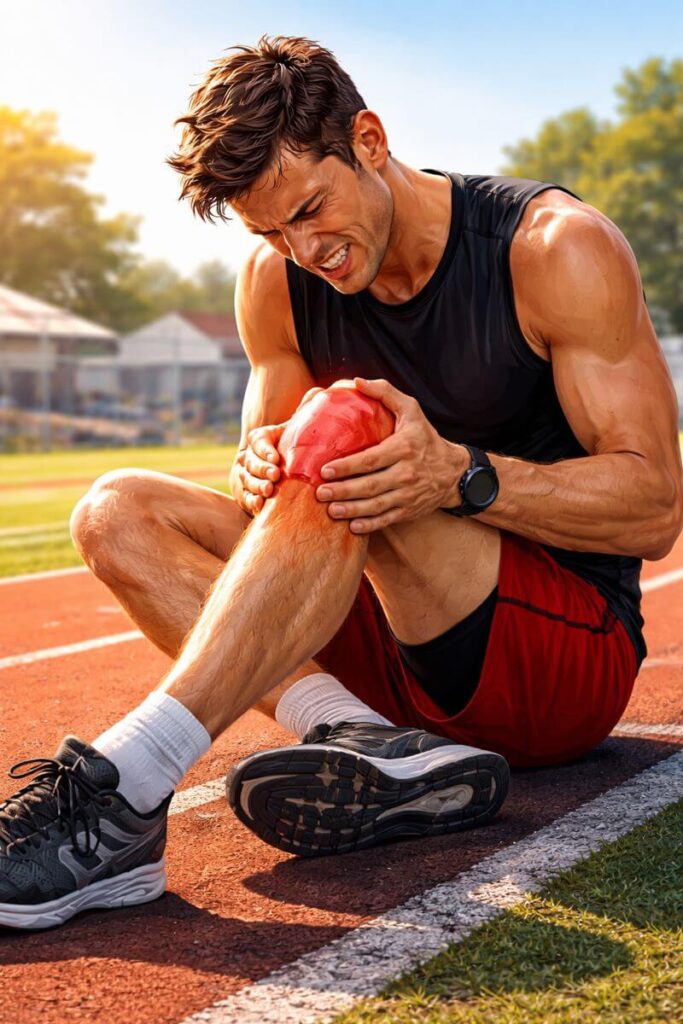

Anterior knee pain in athletes is one of the most frequent symptoms. Regardless of whether you’re running, playing soccer or basketball or lifting in the gym knees take a beating both in and out of action. Knee Pain: Its Causes, Prevention and Treatment Being aware of the underlying causes, prevention techniques, and treatment options is important for athletes who wish to stay in the game or minimize long-term injuries.
Understanding Knee Pain in Athletes
Knee pain in athletes can manifest in different areas and intensities, making it crucial to identify the exact location and cause. Athletes often report:
-
Pain behind knee – This can indicate issues like a Baker’s cyst, hamstring injuries, or ligament problems.
-
Inner knee pain / medial knee pain – Commonly linked to meniscus tears or medial collateral ligament (MCL) injuries.
-
Outer knee pain / pain on outside of knee – Often caused by iliotibial (IT) band syndrome, especially in runners.
-
Knee pain when bending or squatting – Suggests patellofemoral pain syndrome or cartilage problems.
-
Burning pain in knee – May indicate inflammation or overuse injuries.
Athletes may also experience knee pain after running, knee pain walking up or down stairs, or generalized hip and knee pain, which often points to alignment or muscular issues.

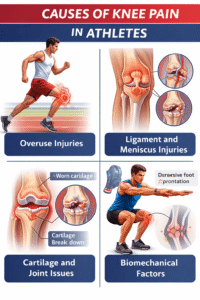
Causes of Knee Pain in Athletes
The origins of knee pain are different according to the sport, amount of training and individual bio-mechanics. Some common reasons include:
1. Overuse Injuries
The knee joint can become strained through repetitive activities such as: running, jumping, cycling etc. Overuse injuries often result in:
Patellar tendinitis – Pain around or behind the knee cap from inflammation of the tendon.
IT band syndrome – Causes pain on outside of knee, a.k.a. outer knee pain or lateral knee pain, especially in runners.
Runner’s knee (patellofemoral pain syndrome) – Can cause pain on inside of knee when bending, knee pain squatting.
2. Ligament and Meniscus Injuries
Athletes who engage in high-impact sports or sudden direction changes may experience ligament injuries. Examples include:
-
Anterior cruciate ligament (ACL) tear – Can cause sharp pain and instability.
-
Medial collateral ligament (MCL) injury – Leads to inner knee pain and difficulty with lateral movements.
-
Meniscus tears – Often cause inside knee pain or knee pain on inside of knee joint, sometimes accompanied by swelling or locking.
3. Cartilage and Joint Issues
Cartilage damage or arthritis can develop over time, particularly in athletes with a history of repeated stress. Conditions like osteoarthritis may result in knee pain after running or pain in right knee ICD 10 / left knee pain ICD 10 codes.
4. Biomechanical Factors
Poor alignment, muscle imbalances, or weak hip and thigh muscles can contribute to knee pain from running or inside knee pain from running. Additionally, overpronation or flat feet can strain the knees, causing outer knee pain or inside knee pain.
ICD-10 Codes for Knee Pain
Healthcare providers often use ICD-10 codes to classify knee pain:
-
Left knee pain ICD 10 – M25.561
-
Right knee pain ICD 10 / ICD 10 right knee pain / right knee pain ICD 10 code – M25.561
-
Knee pain ICD 10 – M25.56
-
These codes help doctors document the location and nature of knee pain in athletes for diagnosis and treatment.
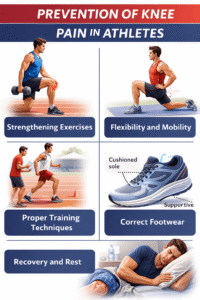
Prevention of Knee Pain in Athletes
Preventing knee pain is always better than treating it. Athletes can adopt several strategies:
1. Strengthening Exercises
Strong muscles around the knee help absorb impact and protect the joint. Focus on:
-
Quadriceps and hamstrings – To support the front and back of the knee.
-
Glute and hip muscles – Helps with alignment and reduces hip and knee pain.
-
Calves and lower legs – Improve stability and reduce stress on the knees.
2. Flexibility and Mobility
Regular stretching prevents tight muscles that contribute to knee pain when bending or knee pain when squatting. Include:
-
Hamstring stretches
-
IT band stretches for outer knee pain
-
Quadriceps stretches
3. Proper Training Techniques
-
Gradually increase intensity and mileage to avoid knee pain from running.
-
Avoid sudden changes in surface or shoes.
-
Use KT tape for knee pain as a temporary support to improve joint stability.
4. Correct Footwear
Wearing sport-specific, well-cushioned shoes helps absorb impact and reduce inner knee pain and outside knee pain.
5. Recovery and Rest
Adequate rest, ice therapy, and listening to your body prevent overuse injuries that cause burning pain in knee or knee pain walking up down stairs.
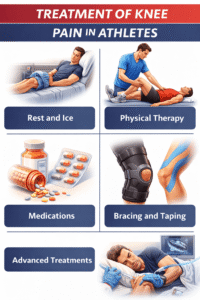
Treatment of Knee Pain in Athletes
Treatment depends on the type and severity of knee pain. Common approaches include:
1. Rest and Ice
-
Reduce activity that worsens pain.
-
Apply ice packs to decrease swelling and discomfort.
2. Physical Therapy
Physical therapists can address:
-
Inside knee pain or medial knee pain
-
Pain on outside of knee / outer knee pain
-
Muscle imbalances and mobility issues
3. Medications
Anti-inflammatory medications may be prescribed for temporary relief.
4. Bracing and Taping
-
KT tape for knee pain can stabilize the joint during training.
-
Knee braces help with ligament injuries or chronic instability.
5. Advanced Treatments
For severe injuries such as ACL tears or meniscus damage, surgical intervention may be necessary. Post-surgery rehabilitation is crucial to return to sports safely.
Tips for Athletes with Knee Pain
-
Listen to your body – Avoid pushing through pain, especially knee pain after running.
-
Track pain location – Distinguish between pain on inside of knee, pain on outside of knee, or pain behind knee.
-
Warm up and cool down – Reduces strain and prevents overuse injuries.
-
Use proper techniques – Especially in squats, jumps, and running.
-
Consult a healthcare professional – For persistent pain or if pain worsens despite rest.
Conclusion
Knee pain in athletes is a common but manageable problem. Understanding the causes—ranging from overuse injuries and ligament tears to biomechanical issues—helps prevent long-term damage. Prevention strategies such as strengthening exercises, flexibility routines, proper training techniques, and using tools like KT tape for knee pain can keep athletes performing at their best. When knee pain persists, medical evaluation using ICD-10 codes for knee pain ensures proper diagnosis and treatment. By taking proactive measures, athletes can minimize inside knee pain from running, outer knee pain, and other types of discomfort, keeping their knees healthy for the long game.
want to read more articles? Click here
or
want to read article about postures correction? Click here

Pingback: 7 Common Causes of Ankle Pain You Shouldn’t Ignore - alignedliving.blog