

Poor posture doesn’t stop when you go to bed. In fact, sleeping posture plays a major role in how your neck, shoulders, and spine feel the next day. If you wake up with a stiff neck, upper back tightness, or lower back pain, your sleep posture may be silently working against you.
Learning how to sleep with proper posture can help with daily discomfort, keep your spine in line, and even fix long-term posture problems like forward head posture. We’ll talk about the healthiest way to sleep, which positions are best for neck and back problems, and answer frequent questions like whether sleeping without a pillow benefits your posture.
Why the Way You Sleep Is More Important Than You Think
You sleep for over a third of your life, which means your body stays in one position for several hours at a time. Bad sleep position can:
- Make muscles stiffer
- Put pressure on spinal discs
- Make forward head posture worse
- Cause soreness in the neck and shoulders
- Causes headaches in the morning
A good sleep position, on the other hand, lets your spine rest in a neutral position, which helps your muscles relax and your joints heal as you sleep. This is why it’s just as vital to sleep with good posture as it is to sit or stand up straight during the day.
How to Sleep with Your Spine in the Right Position
The purpose of the ideal sleeping position is simple: keep your spine straight and neutral from your head to your pelvis.
To support your neck and back as you sleep, you should:
- Keep your head in line with your spine.
- Don’t bend or twist too much
- Help the natural curvature of the spine
- Take some of the stress off your muscles and joints.
This applies no matter which sleeping position you choose.
The best way to sleep if you have neck or back pain
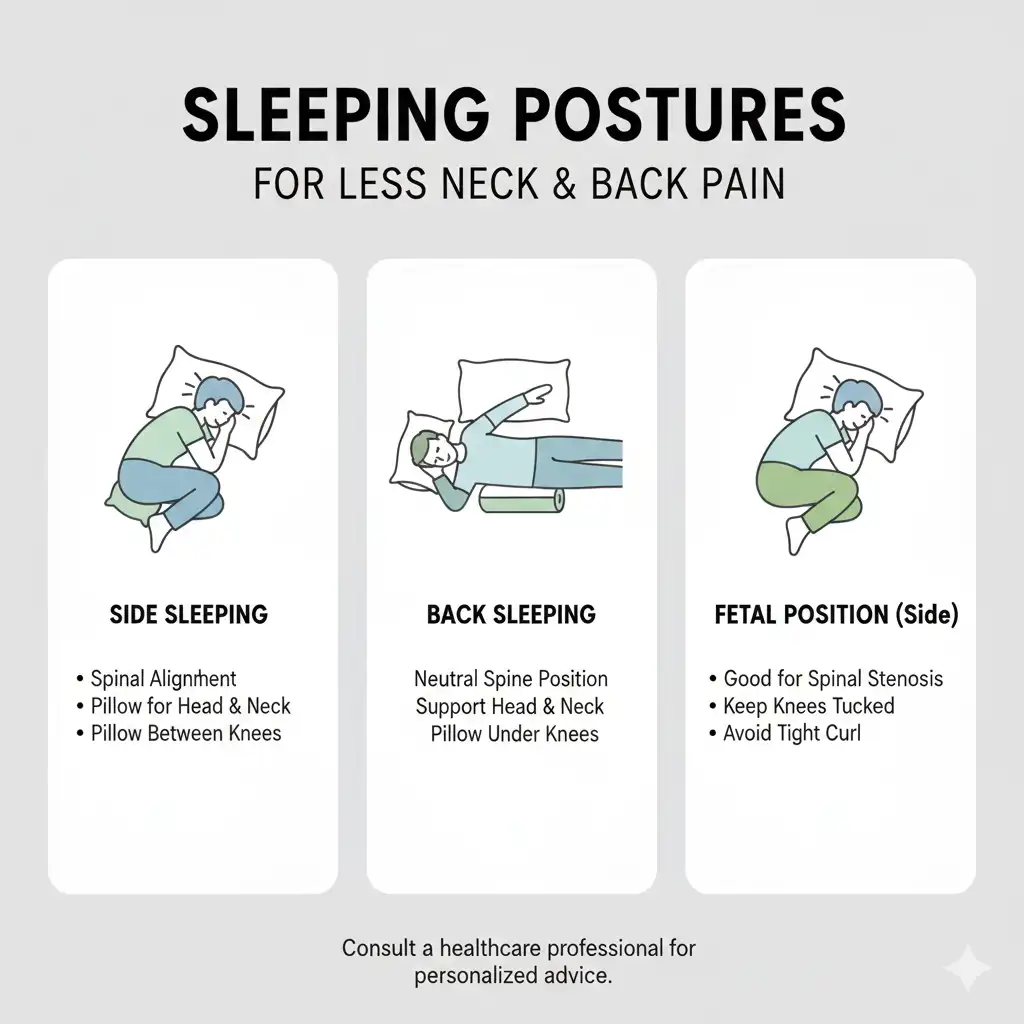
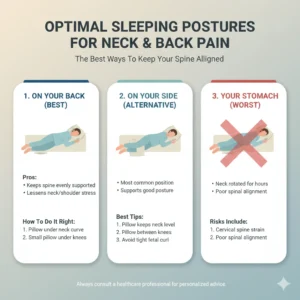
1. The best way to sleep is on your back.
People often say that lying on your back is the greatest way to sleep if you have neck pain or want to keep your spine in line.
Pros:
- Keeps the spine evenly supported
- Lessens stress on the neck and shoulders
- Helps fix the way your head is positioned when you sleep
How to do it right:
- Use a pillow that supports the curve of your neck when you sleep.
- Put a small pillow under your knees to ease the tension on your lower back.
If you’re trying to learn how to sleep in a way that will help your posture in the long run, this is the best position.
2. Sleeping on Your Side (Best Alternative)
Side sleeping is the most common position and can still support good posture—if done correctly.
Best tips for side sleeping:
- Use a pillow that keeps your neck level with your spine
- Place a pillow between your knees
- Avoid curling into a tight fetal position. This is considered a proper sleeping posture for neck pain when the pillow height is correct.
3. Sleeping on Your Stomach (Worst for Posture)
Stomach sleeping places your neck in rotation for hours, making it one of the worst sleep postures.
Risks include:
- Increased stiff neck from sleeping posture
- Strain on the cervical spine
- Poor spinal alignment. If you must sleep on your stomach, use a very thin pillow or none at all—but transitioning to another posture is best.
Correct Sleeping Posture for Neck Support
Your neck is the most vulnerable part of your spine during sleep. A correct sleeping posture for neck alignment requires:
- Neutral head positioning
- No excessive tilt or rotation
- Proper pillow support
Using the wrong pillow can undo even the best sleep posture. A proper sleeping posture pillow should support the curve of your neck without pushing your head forward.
Does sleeping without a pillow help your posture?
This is one of the most common things people ask online, and the answer depends on how you sleep.
Does sleeping without a pillow help your posture?
- People who sleep on their backs: No. It can make the curvature in the neck flatter.
- No, side sleepers should not do this since it bends the neck.
- Stomach sleepers: Sometimes yes, because it keeps your neck from turning.
particular individuals ask, “Will sleeping without a pillow improve posture?” The answer is yes, but only in particular instances. For most people, not using a pillow while sleeping does not help their posture and may even make neck pain worse.
Can sleeping without a pillow help your posture in the long run?
Many people believe that sleeping without a pillow is better for posture, although there isn’t much proof that this is true. In reality, a lot of people who search for “does sleeping without a pillow help posture” end up feeling stiffer.
Instead of getting rid of all your pillows, it’s advisable to choose the correct height and firmness for your pillows.
How to Fix Your Posture While You Sleep (Step by Step)
You don’t need to make big adjustments to your sleep posture; you just need to be consistent.
1. Pick the Right Pillow
- Cervical or contoured pillows assist keep your neck in line.
- Don’t use pillows that press your head too far forward.
2. Give your spine some support
- For people who sleep on their backs, put a pillow beneath their knees.
- For people who sleep on their sides, put a pillow between their knees.
3. Change the position of your mattress
- A medium-firm mattress is usually the greatest choice for supporting your sleep posture.
4. Keep your sleep position the same
- Changing positions often makes it harder to get the benefits of a healthy sleeping posture.
How to Sleep to Fix Bad Posture
If your shoulders are rounded or your head is forward, sleeping might help or hurt your recovery.
Here are some tips for improving your posture as you sleep:
- Put a pillow beneath your head and lie on your back.
- Don’t put more than one pillow under your head.
- Stretch your neck and shoulders before bed.
Learning how to sleep to fix your posture can help with posture exercises and adjustments to your workspace over time.
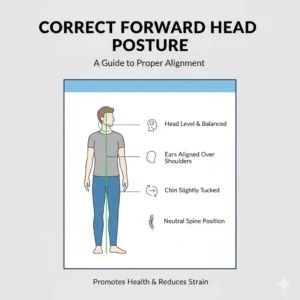
Correct Forward Head Posture While Sleeping
Forward head posture doesn’t disappear overnight—but your sleeping posture can help reverse it.
Best approach:
- Back sleeping with a cervical pillow
- No high pillows that push the head forward
- Gentle neck support, not elevation
This alignment reduces stress on cervical muscles and supports correction.
Proper Sleeping Posture After C-Section
After surgery, posture becomes even more important.
Sleeping posture after C-section recommendations:
- Sleep on your back or side with knee support
- Avoid stomach sleeping initially
- Use pillows to reduce abdominal strain
Good sleep posture supports healing while protecting the spine.
How to Improve Posture While Sleeping Naturally
Here’s a quick checklist to improve posture overnight:
- Maintain neutral spine alignment
- Use posture-supportive pillows
- Avoid twisted sleeping positions
- Stretch gently before bed
- Be consistent
Small changes in how to sleep with good posture can significantly reduce pain over time.
Last Thoughts: Sleep Better for Better Posture
One of the easiest yet most often ignored strategies to ease neck and back discomfort is to change how you sleep. Changing how you sleep can really help with stiffness, bad posture, or pain every day.
Instead of questioning “Does sleeping without a pillow help my posture?” concentrate on supporting your spine the right way. Sleep can be a great way to fix your posture and ease your discomfort if you have the suitable position, cushion, and routines.
When you sleep, your posture doesn’t stop functioning. Make sure it’s working for you, not against you.
Want to read more articles about posture and pain relief? Click here



Pingback: Heat vs Cold Therapy for Pain Relief: Best Products and When to Use Each - alignedliving.blog