


Acute vs Chronic pain represents two distinct experiences that differ in onset, duration, and purpose. Acute pain typically develops suddenly as a direct response to injury, surgery, or illness and serves as a warning signal that the body is under threat, usually resolving as healing occurs. In contrast, chronic pain persists beyond normal tissue recovery, often lasting months or longer, and may continue even in the absence of ongoing injury, significantly affecting physical function, emotional well-being, and quality of life.
1. Introduction: Why Understanding Pain Types Matters
Pain is one of the most common reasons people seek medical care, yet it is often misunderstood. Knowing the difference between acute vs chronic pain is essential—not only for patients, but also for healthcare providers, nurses, and caregivers. Proper classification affects diagnosis, treatment decisions, nursing care plans, and even patient rights.
Whether someone is experiencing acute vs chronic pain, long-term discomfort, or recurring injuries, understanding acute vs chronic pain helps ensure the right care at the right time.
2. What is pain that comes on suddenly? What it means and some examples
What Does Acute Pain Mean?
Acute pain meaning is pain that comes on quickly and is usually caused by a specific accident, sickness, or medical procedure. Acute pain is basically the body’s way of telling you something is wrong.
What is acute pain?
So, what does “acute pain” mean? Acute pain lasts only briefly and usually resolves when the underlying cause heals. It can last anywhere from a few seconds to a few weeks, but it doesn’t last forever.
Here are some common examples of acute pain:
- Pain after surgery
- A hurt ankle
- A bone that is shattered
- Toothache
- Acute low back pain (typically coded as ICD-10 for acute low back pain)
In clinical contexts, this is frequently designated as acute pain or acute pain nursing diagnosis.

3. What Is Chronic Pain? Definition and Long-Term Impact
Unlike acute pain, chronic pain lasts well beyond normal healing time. If you’re comparing acute vs chronic pain, duration is one of the biggest differences.
Chronic pain is usually defined as pain lasting longer than 3–6 months. It may continue even when no clear injury is present.
Examples include:
-
Chronic neck pain ICD-10
-
Chronic lower back pain ICD-10
-
Chronic ankle pain
-
Chronic foot pain
Some individuals are diagnosed with chronic pain syndrome, which is classified under chronic pain syndrome ICD-10 or ICD-10 for chronic pain syndrome.

4. Acute Pain vs Chronic Pain: Key Differences
Understanding the difference between acute vs chronic pain helps clarify treatment approaches.
| Feature | Acute Pain | Chronic Pain |
|---|---|---|
| Onset | Sudden | Gradual or persistent |
| Duration | Short-term | Long-term |
| Purpose | Protective | Often non-protective |
| Treatment Goal | Healing | Management |
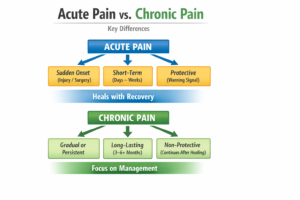
In simple terms, acute pain vs chronic pain is the difference between a warning signal and a long-term condition.
This comparison is often described interchangeably as:
-
acute pain vs chronic
-
chronic vs acute pain
-
pain acute vs chronic
-
acute versus chronic pain
5. Nursing Perspective: Nursing Diagnosis and Care Plans for Acute Pain
From a nursing point of view, acute pain needs an organised assessment and treatment.
Nursing Diagnosis for Acute Pain
A nurse makes an acute pain nursing diagnosis (or pain acute nursing diagnosis) when a patient is in pain because of tissue damage, surgery, or an injury.
Important parts are:
- Where the pain is and how bad it is
- Things that set off and ease the pain
- Effect on sleep and movement
- Plan for Acute Pain Care (NCP)
An acute pain care plan or acute pain NCP is all about:
- Lessening pain
- Better comfort
- Quicker recovery
Nurses write this down as an acute pain nursing diagnosis and change the interventions based on how the patient reacts.
6. Therapies for Acute Pain and Nursing Actions
Therapies for Acute Pain
Acute pain treatments try to ease the pain while also treating the cause of the pain. Some of these are:
- Drugs like painkillers and anti-inflammatories
- Ice or heat treatment
- Rest and do not move
- Help with physical needs
Nursing Actions for Severe Pain
Some common nursing therapies for acute pain are:
- Regularly checking for pain
- Giving and keeping an eye on medications
- Getting into a comfortable position
- Teaching patients
These treatments are necessary to stop acute discomfort from turning into chronic pain.
7. Chronic Pain Management and Pain Scales
Chronic pain is treated differently because it cannot always be “fixed.”
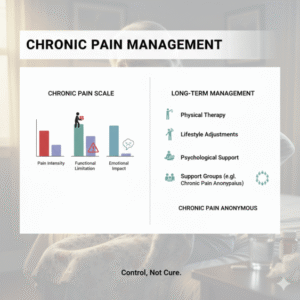
Chronic Pain Scale
Healthcare providers often use a chronic pain scale to measure:
-
Pain intensity
-
Functional limitation
-
Emotional impact
Long-Term Management
Chronic pain management may involve:
-
Physical therapy
-
Lifestyle adjustments
-
Psychological support
-
Support groups like Chronic Pain Anonymous
Unlike acute pain, chronic pain focuses on control rather than cure.
8. ICD-10 Codes for Acute and Chronic Pain Conditions
Accurate coding is important for diagnosis, insurance, and treatment documentation.
Common ICD-10 Codes
-
Acute low back pain ICD-10
-
Chronic low back pain ICD-10
-
Chronic neck pain ICD-10
-
Chronic ankle pain
-
Chronic foot pain
-
Chronic pain syndrome ICD-10
-
Chronic pain ICD
-
Other chronic pain ICD-10
These codes help distinguish acute vs chronic pain for clinical and legal purposes.
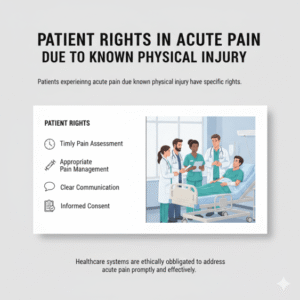
9. Patient Rights in Acute Pain Due to Known Physical Injury
Patients experiencing acute pain due to known physical injury have specific rights. Patient rights in acute pain due to known physical injury include:
-
Timely pain assessment
-
Appropriate pain management
-
Clear communication
-
Informed consent
Healthcare systems are ethically obligated to address acute pain promptly and effectively.
10. Conclusion: Why Proper Pain Classification Is Essential
Understanding acute vs chronic pain is more than a medical distinction—it shapes treatment, nursing care, patient expectations, and long-term outcomes.
Acute pain is a warning sign and usually goes away on its own, but chronic pain needs continuing care and support. Correct diagnosis, appropriate care plans, and patient education ensure better quality of life for those dealing with both conditions.
The first step to giving good treatment is to know the difference between acute vs chronic pain, whether you are a patient, nurse, or carer.
Want to read more articles: Click here



Pingback: Posture During Pregnancy: Meaning, Importance, and Safe Corrections - alignedliving.blog