

Introduction
Radiating nerve discomfort that travels from the lower back into the leg can disrupt sleep, mobility, and daily productivity. Many people struggle because they treat symptoms instead of addressing the sciatic nerve compression and inflammation causing the problem. The solutions below focus strictly on recovery, relief strategies, and long-term prevention. Each method is designed to target nerve irritation, muscular imbalance, and lifestyle triggers that prolong healing.
1. Use Targeted Vitamin Therapy to Support Nerve Healing
Nutritional deficiencies often slow sciatic nerve repair and increase inflammation around the sciatic nerve. Supporting nerve regeneration with specific vitamins can accelerate recovery.
The 3 Vitamins for Sciatic Nerve Relief
Vitamin B12
-
Repairs damaged nerve coverings (myelin sheath).
-
Reduces tingling and numbness.
-
Recommended dose: 1000–2000 mcg daily (methylcobalamin form is most absorbable).
Vitamin B6
-
Supports nerve signal transmission.
-
Helps reduce burning or shooting sensations.
-
Recommended dose: 25–50 mg daily.
Vitamin D
-
Reduces inflammation and strengthens spinal support muscles.
-
Supports bone alignment and posture stability.
-
Recommended dose: 2000–4000 IU daily (depending on deficiency level).
What Is the Number One Vitamin for Sciatic Nerve Relief?
Vitamin B12 is considered the most effective because it directly repairs nerve tissue and supports signal communication. Combining it with B6 and Vitamin D produces faster results than taking one vitamin alone.

2. Address Knee and Foot Symptoms by Releasing Nerve Pressure
Many people experience discomfort in the knee or foot without realizing that it originates from the lower spine. Compression along the nerve pathway can cause radiating sensations into the lower leg and toes.
Recovery Strategy
Nerve Flossing Exercise
-
Sit upright on a chair.
-
Extend one leg slowly.
-
Point toes upward.
-
Gently lower the leg.
-
Repeat 10 times per leg, twice daily.
This exercise improves nerve mobility and reduces trapped nerve tension that can radiate into the knee or foot.
Calf Muscle Release
-
Use a foam roller or massage ball.
-
Roll slowly for 60 seconds on each calf.
-
Perform twice daily.
Tight calves often increase nerve tension traveling into the foot.
3. Relieve Groin Discomfort by Correcting Hip Muscle Imbalance
Radiating discomfort in the groin region often results from tight hip flexors and piriformis muscles compressing the nerve near the pelvis.
Recovery Routine
Piriformis Stretch
-
Lie on your back.
-
Cross the affected leg over the opposite knee.
-
Pull the uncrossed leg toward your chest.
-
Hold for 30 seconds.
-
Repeat three times daily.
Hip Flexor Release
-
Kneel on one knee.
-
Push hips forward gently.
-
Keep spine straight.
-
Hold 30 seconds on each side.
Releasing these muscles reduces nerve compression around the pelvis and groin region.
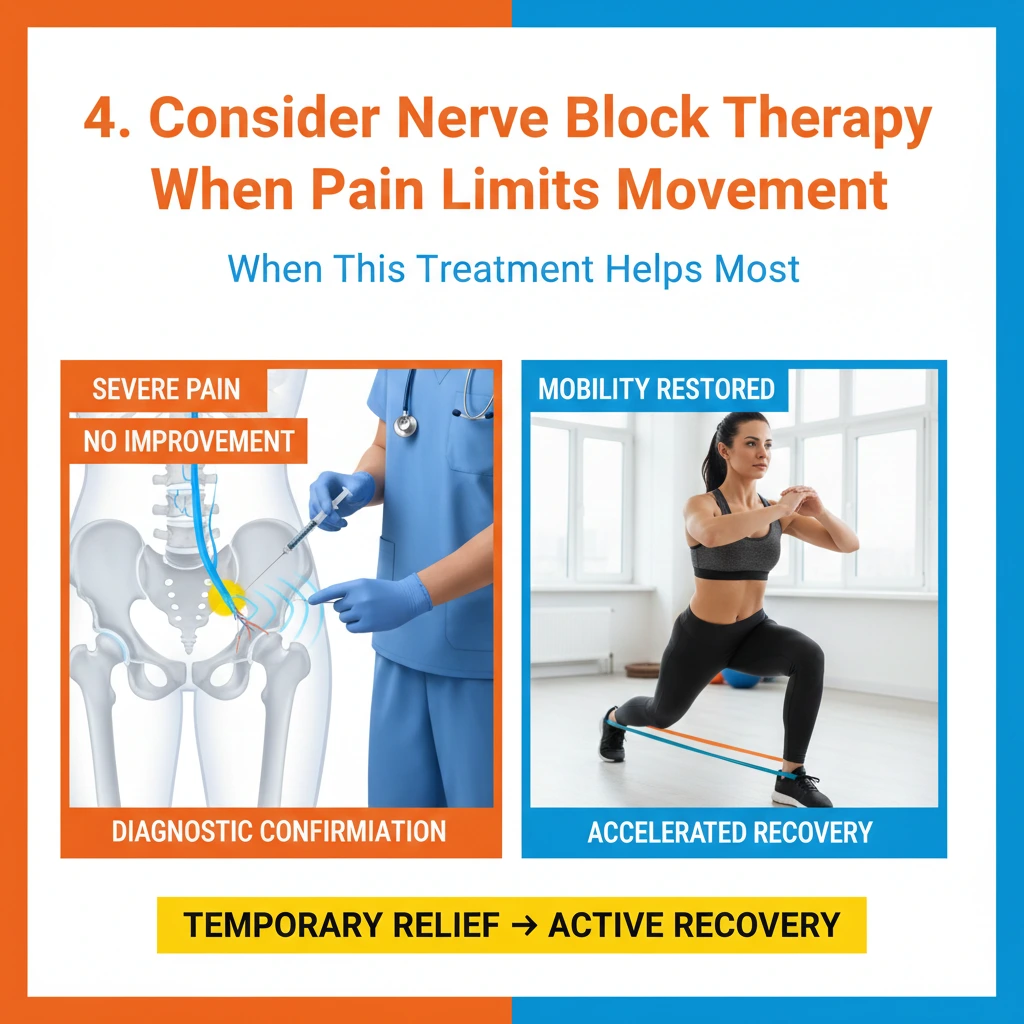
4. Consider Nerve Block Therapy When Pain Limits Movement
If conservative treatments fail and mobility becomes severely restricted, nerve block injections can temporarily interrupt nerve signals and reduce inflammation.
When This Treatment Helps Most
-
Severe radiating leg symptoms preventing walking or sleeping.
-
Pain not improving after 6–8 weeks of therapy.
-
Diagnostic confirmation of nerve compression.
How It Supports Recovery
Nerve block therapy creates a temporary relief window, allowing patients to perform strengthening exercises and physical therapy without resistance from constant nerve irritation.
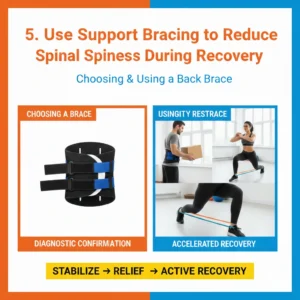
5. Use Support Bracing to Reduce Spinal Stress During Recovery
A properly fitted brace stabilizes the lower spine, reducing pressure on the sciatic nerve during daily activities.
Choosing the Best Brace
Look for:
-
Adjustable lumbar compression straps.
-
Breathable materials for daily wear.
-
Flexible but supportive frame that allows natural movement.
How to Use a Brace Effectively
-
Wear during prolonged standing or lifting.
-
Avoid wearing continuously longer than 4–6 hours.
-
Combine with strengthening exercises to prevent muscle weakening.
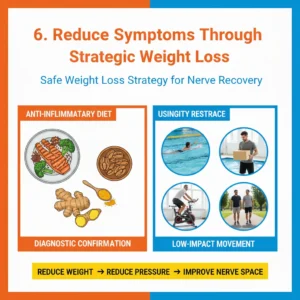
6. Reduce Symptoms Through Strategic Weight Loss
Excess body weight increases spinal compression and sciatic nerve irritation. Even moderate weight reduction significantly reduces pressure on spinal discs.
Safe Weight Loss Strategy for Nerve Recovery
Anti-Inflammatory Diet
-
Increase omega-3 foods (salmon, flaxseed, walnuts).
-
Reduce processed sugar and refined carbohydrates.
-
Add turmeric and ginger for natural inflammation reduction.
Low-Impact Movement
-
Swimming
-
Stationary cycling
-
Walking on flat surfaces
Losing just 5–10% of body weight often reduces spinal load and improves nerve space.
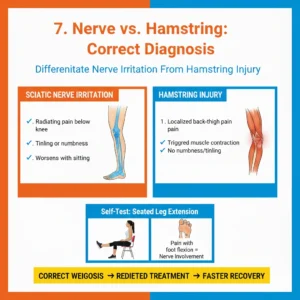
7. Learn to Differentiate Nerve Irritation From Hamstring Injury
Misdiagnosis delays recovery because treatments differ greatly.
Signs of Sciatic Nerve Irritation
-
Radiating discomfort traveling below the knee.
-
Tingling or numbness.
-
Symptoms worsen with sitting.
Signs of Hamstring Injury
-
Localized soreness at the back of the thigh.
-
Pain is triggered by muscle contraction.
-
No numbness or tingling.
Self-Test
Seated Leg Extension Test
-
Sit upright.
-
Slowly extend one leg.
-
If discomfort increases with foot flexion, nerve involvement is likely.
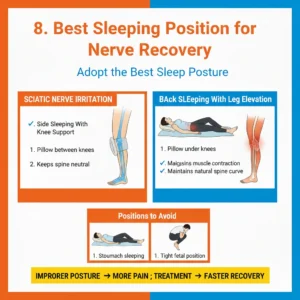
8. Adopt the Best Sleeping Position for Nerve Recovery
Improper sleep posture increases spinal misalignment and prolongs recovery time.
Most Effective Sleeping Positions
Side Sleeping With Knee Support
-
Place a pillow between your knees.
-
Keeps spine neutral and reduces nerve tension.
Back Sleeping With Leg Elevation
-
Place a pillow under your knees.
-
Maintains natural spinal curve.
Positions to Avoid
-
Sleeping on the stomach.
-
Curling tightly into a fetal position.
-
Using overly soft mattresses.
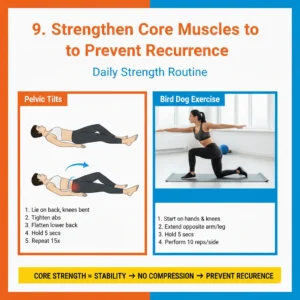
9. Strengthen Core Muscles to Prevent Recurrence
Weak abdominal and back muscles increase spinal instability, allowing the sciatic nerve compression to return.
Daily Strength Routine
Pelvic Tilts
-
Lie on your back with knees bent.
-
Tighten abdominal muscles.
-
Flatten your lower back into the floor.
-
Hold 5 seconds.
-
Repeat 15 times.
Bird Dog Exercise
-
Start on hands and knees.
-
Extend opposite arm and leg.
-
Hold 5 seconds.
-
Perform 10 repetitions per side.
Core strengthening improves spinal support and reduces triggers for sciatic nerve compression.
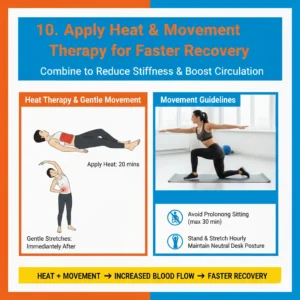
10. Apply Heat and Movement Therapy for Faster Recovery
Combining heat with controlled movement increases blood flow and reduces muscular guarding.
Heat Therapy Plan
-
Apply a heating pad for 20 minutes.
-
Perform gentle stretches immediately afterward.
-
Repeat twice daily.
Movement Guidelines
-
Avoid prolonged sitting for longer than 30 minutes.
-
Stand and stretch every hour.
-
Maintain a neutral posture during desk work.
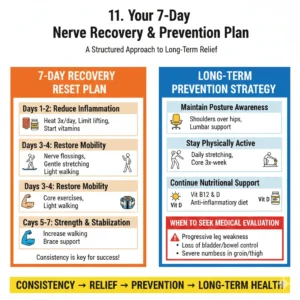
11. Follow a Structured 7-Day Recovery Reset Plan
Days 1–2: Reduce Inflammation
-
Apply heat therapy three times daily.
-
Limit lifting and bending.
-
Begin vitamin supplementation.
Days 3–4: Restore Mobility
-
Add nerve flossing exercises.
-
Start gentle stretching.
-
Introduce light walking sessions.
Days 5–7: Strength and Stabilization
-
Begin core strengthening exercises.
-
Increase walking duration gradually.
-
Use brace support during extended activity.
Consistency during the first week often determines long-term recovery success.
Long-Term Prevention Strategy
Recovery requires lifestyle changes that maintain nerve health and spinal stability.
Maintain Posture Awareness
-
Keep your shoulders aligned with your hips when sitting.
-
Use ergonomic chairs or lumbar support cushions.
Stay Physically Active
-
Stretch hips and hamstrings daily.
-
Strengthen core muscles three times weekly.
Continue Nutritional Support
-
Maintain adequate Vitamin B12 and Vitamin D levels.
-
Follow anti-inflammatory eating habits.
When to Seek Medical Evaluation
Immediate professional evaluation is necessary if symptoms include:
-
Progressive leg weakness.
-
Loss of bladder or bowel control.
-
Severe numbness in the groin or inner thigh.
These signs may indicate advanced nerve compression requiring urgent treatment.
Conclusion
Sciatic pain can become chronic when nerve compression, muscle imbalance, and inflammation are not treated simultaneously. A recovery plan combining targeted vitamin therapy, movement correction, strengthening, posture improvement, and weight management provides the most effective path to healing. Consistently following these structured solutions can reduce symptoms, restore mobility, and prevent recurrence.
Click here to read more articles related to Pain Relief, or Interested in Posture Alignment-related articles instead?


Pingback: Headaches and Migraines: Practical, Natural Solutions for Lasting Relief - Alignedliving.blog