
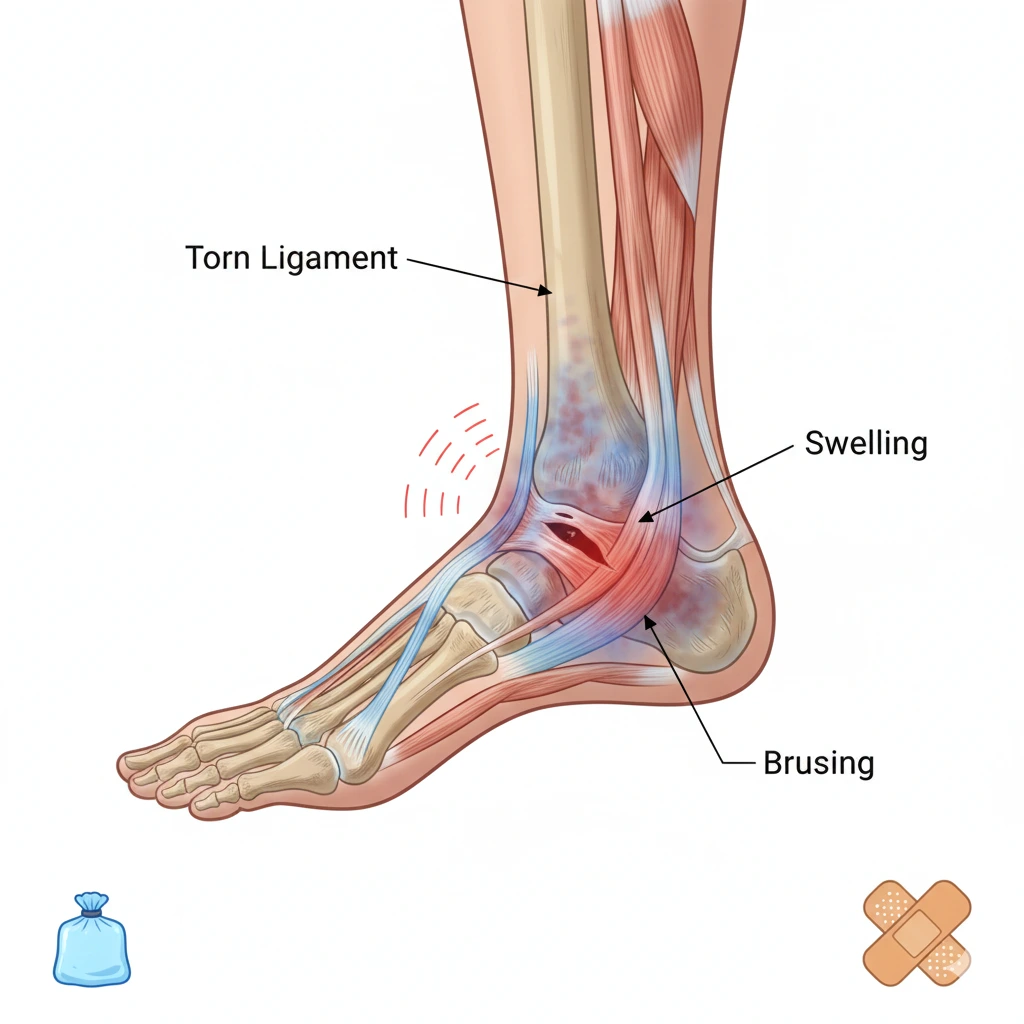

Ankle sprains are one of the most prevalent injuries in sports and daily life. Whether you roll your ankle walking across a simple twist, mistep in a heated game of basketball, or plant with your foot at an awkward angle in soccer, the sustained stretch and strain can end up having you sidelined for days (or even weeks). Knowing the different ankle sprains, what causes them, and how to get them healed and treated can help you heal faster to get back in action.
What is an Ankle Sprain?
An ankle sprain is caused when the ligaments around the ankle joint are overstretched or torn as a result of sudden movements such as rolling, twisting, or turning the foot. Ligaments are strong bands of tissue that bind bones to one another, and when overstretched, they can be damaged. Although an ankle sprain may be mistaken for a break, they differ in level of seriousness as well as the methods to treat them.
A sprain usually occurs when a ligament is stretched or torn, whereas a fracture involves a break in the bone. A sprain might produce swelling and bruising, pain that makes it difficult to move the foot, but not a deformity. But you have to be on alert to heal it right.
Causes of Ankle Sprains
Running, jumping, cutting (basketball), and turning activities (soccer) are all high-risk sports that could result in ankle sprains. A frequent cause is twisting the ankle in or out, stretching the ligaments beyond their normal range. How long does a sprained ankle take to heal? This is dependent on how bad the sprain is.
Other factors, such as improper shoes, fatigue, or poor training leading to weak muscles, can also predispose a sprain of the ankle. For instance, you are more likely to roll or twist your ankle if playing on uneven ground or in high heels.
Types of Ankle Sprains
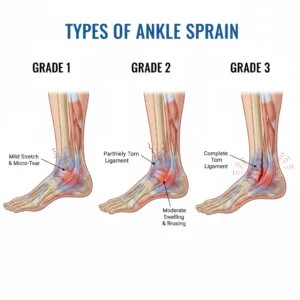
Ankle Sprain: Grades. Ankle sprains are divided into three grades, which range from mild to severe:
Grade 1 ankle sprain: This is a mild sprain, with slight stretching and some damage to the fibers (fibrils) of the ligament. Swelling and discomfort may be minimal, and you may be able to walk without much pain.
Grade 2 Ankle Sprain: A partial tear in the ligament fibers. This sprain results in swelling, bruising, and pain, making walking very uncomfortable.
Ankle Sprain Grade 3: The ligament is torn completely. The foot is very swollen and bruised and should not bear weight on the injured foot.
Also, high ankle sprains (those above the joint of your ankle) are much worse than low ones, and typically take more time to heal. Such sprains result from over-twisting, for instance, during contact sports. The high vs low ankle sprain. There are differences in where the injury occurs, the level of pain, and also how long it will take to recover.
Symptoms of Ankle Sprains
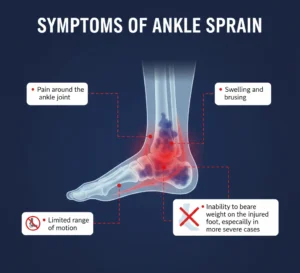
Common symptoms of an ankle sprain include:
-
Pain around the ankle joint
-
Swelling and bruising
-
Limited range of motion
-
Inability to bear weight on the injured foot, especially in more severe cases
Grade 1 ankle sprains may cause only mild swelling and discomfort, while grade 3 sprains can result in significant bruising and a complete inability to walk. If you experience intense pain, it’s important to differentiate between a sprained ankle and a broken ankle vs sprained ankle to avoid misdiagnosis. A broken ankle vs sprained ankle may involve more severe symptoms, including deformity, inability to move, or extreme pain.
How Long Does It Take for a Sprained Ankle to Heal?
Some factors that play a role in how long it takes an ankle sprain to heal include: The length of time after the injury when a person seeks treatment, and the shipping address. Is there anything we can do to speed your recovery?
Grade 1 Ankle Sprain: Usually, it heals within 1-2 weeks if proper rest and care are done. Minor sprains often recover with little treatment.
Ankle Sprain Grade 2: Moderate sprains may require 4-6 weeks to heal completely. Treatment may involve R.I.C.E. therapy.
Grade 3 Ankle Sprain Recovery time: Severe sprains can take longer, more than eight weeks to heal. You may require a boot, crutches, or even surgery if the ligament tear is severe.
What’s more, the high ankle sprain recovery can be more extended than low ankle sprains as the damage is applied to ligaments that join the bones of the lower leg. High ankle sprains tend to be worse than other types of ankle sprains and may take a longer time for recovery as well.
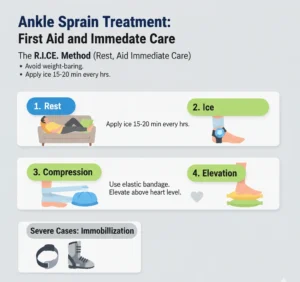
Ankle Sprain Treatment: First Aid and Immediate Care
The first line of treatment for a sprained ankle is the R.I.C.E. method (Rest, Ice, Compression, Elevation):
-
Rest: Avoid putting weight on the injured ankle to give it time to heal.
-
Ice: Apply ice to reduce swelling and numb the pain. Do this for 15-20 minutes every few hours during the first 48 hours.
-
Compression: Use an elastic bandage or wrap to provide support and reduce swelling. Make sure it’s snug but not too tight.
-
Elevation: Raise the injured ankle above the level of your heart to help reduce swelling.
In more severe cases, you may need an ankle brace for a sprain or a boot for a sprained ankle to immobilize the joint. Wearing these devices can help provide stability and reduce the risk of further injury.
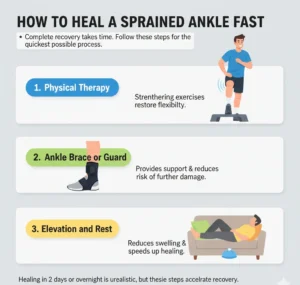
How to Heal a Sprained Ankle Fast
While complete recovery from a sprained ankle may take time, there are several things you can do to speed up the process:
-
Physical Therapy: Once the initial swelling and pain subside, strengthening exercises can help restore flexibility and prevent future injuries.
-
Ankle Brace or Guard: Using an ankle guard sprain during activities helps reduce the risk of further damage and provides support.
-
Elevation and Rest: Keeping your foot elevated and avoiding weight-bearing activities in the early stages of recovery will speed up healing.
If you’re wondering how to heal a sprained ankle fast in 2 days, it’s important to understand that while you can reduce swelling and improve mobility in that time, full recovery will require longer. Aiming to heal a sprained ankle overnight is unrealistic, but you can follow these steps to make the recovery process as quick as possible.
Sprained Ankle Medical Devices and Aids
Medical products such as ankle braces, monitors, and crutches are crucial to recovery. They also support and prevent further injury of the injured joint, allowing it to heal more effectively. When the sprain is more severe, using an ankle boot for the sprain becomes even more critical as it provides extra support and immobilization during your recovery.
Can You Walk on a Sprained Ankle?
One common question is, “Can I walk on my sprained ankle after 3 days?” The answer depends on the severity of the sprain. For a grade 1 ankle sprain, you might be able to walk with some discomfort. However, for more severe sprains (grade 2 or 3), it’s important to avoid putting weight on the injured ankle until the healing process is more advanced.
If you’re wondering, how long will it take to heal a sprained ankle, remember that most mild sprains heal in about 1-2 weeks, but moderate to severe sprains can take 4-8 weeks. Sprained ankle recovery time will depend on how well you follow treatment protocols and how severe the injury is.
When to Seek Medical Attention
If your ankle shows signs of severe pain, cannot bear weight, or if there’s significant swelling or deformity, it’s crucial to seek medical attention. A doctor will assess whether you have a broken ankle vs sprained ankle and recommend an appropriate treatment plan.
If the injury doesn’t seem to improve after a few days or if you experience persistent pain, seeing a specialist may help prevent long-term issues and ensure a faster recovery.
Conclusion
Ankle sprains are a common injury in sports and everyday activities, but with the right treatment, recovery is possible. Whether you’re dealing with a mild sprain or a more severe injury, using the proper techniques, support, and medical aids will help you heal faster and safely return to your routine. Always remember to listen to your body and take the necessary steps to prevent future injuries.
By following the R.I.C.E. method, using appropriate medical devices like braces and boots, and avoiding unnecessary stress on the injured ankle, you’ll be well on your way to a full recovery. Preventing ankle sprains can also be as simple as wearing proper footwear and strengthening the muscles around the ankle joint. With the right care, you can recover faster and get back to doing what you love.
Want to read more articles about pain relief? Click here