
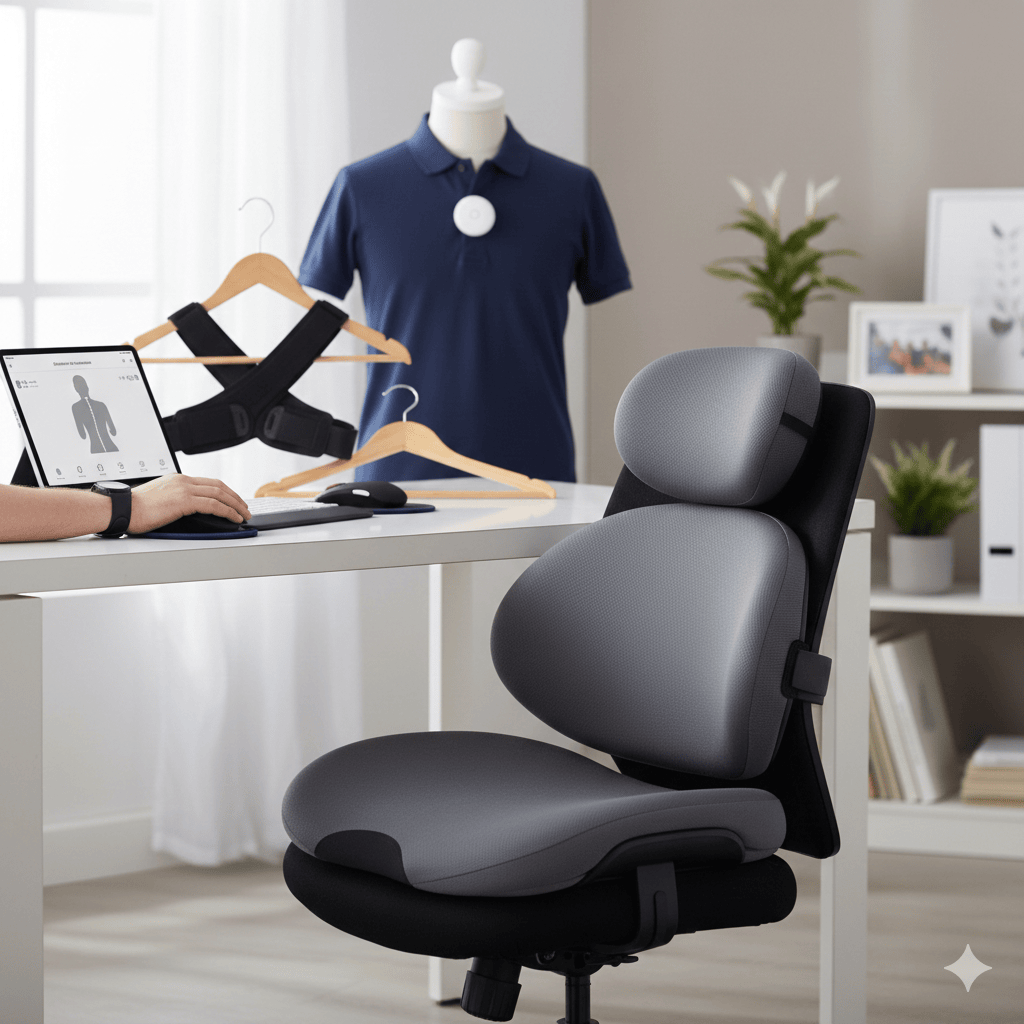

Poor posture has quietly become one of the most common health issues of modern life. Long hours at desks, laptops on couches, phones in our hands, and gaming sessions that stretch into the night all pull our bodies forward. Over time, this creates rounded shoulders, a forward head position, and chronic discomfort in the neck, back, and shoulders.
Most of us know we should “sit up straight,” but awareness alone rarely fixes the problem. Habits built over years are hard to undo. That’s why so many people now ask: do posture correctors really work? Can a simple wearable device actually improve alignment, or is it just another wellness trend?
Let’s break it down—what alignment really means, how these devices work, who they help most, and whether they can create lasting change.
What “Good Alignment” Actually Means
Good posture isn’t about standing stiff like a soldier. Proper alignment means your head, shoulders, and hips stack naturally over your spine, allowing muscles to work efficiently and joints to stay balanced.
When alignment is off, your body compensates. Muscles tighten in some areas and weaken in others. This is why slouching can lead to:
-
Neck and shoulder tension
-
Upper back pain
-
Headaches
-
Fatigue during long workdays
Over time, poor posture becomes automatic. Your body forgets what “neutral” feels like. That’s where posture-support devices come in.
How Posture Correctors Work
A Posture Corrector doesn’t magically straighten your spine. Instead, it works in two main ways:
-
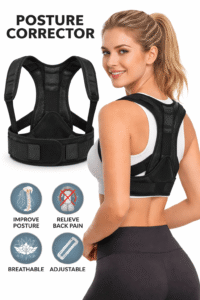
Physical guidance – Light support across the shoulders or upper back gently pulls your body into a more upright position.
-
Behavioral training – Many modern devices act as reminders. When you slouch, you feel pressure or receive a vibration, prompting you to self-correct.
Some models are simple braces. Others are smart posture wearables that connect to apps and track habits. Both aim to rebuild your awareness and help your body relearn proper positioning.
The real value isn’t in being “held upright” all day—it’s in teaching your muscles and brain what correct posture feels like again.
Do They Really Improve Alignment?
So, can a posture corrector fix bad posture? The answer is: it depends on how you use it.
Research and expert opinions agree on one thing—these tools are most effective as training aids, not permanent crutches. Short-term improvements often happen quickly. Many users notice:
-
Reduced slouching
-
Less neck and shoulder strain
-
Increased posture awareness
Long-term improvement comes when the device is used strategically—during desk work, study sessions, or long sitting periods—while your body relearns healthy habits.
Used properly, a posture corrector for alignment can help interrupt years of poor posture patterns and guide you toward lasting change.
Real-World Use Cases
Different lifestyles create different posture problems. Here’s where these tools tend to shine:
Desk Workers
People who sit all day often develop rounded shoulders and “tech neck.” A posture corrector for desk workers helps maintain alignment during long work blocks without constant self-monitoring.
Students
Studying over laptops or books pulls the body forward. Gentle support can prevent hours of slouching.
Gamers
Extended gaming sessions strain the upper back and shoulders. A posture corrector for sitting all day can reduce fatigue and tension.
Remote Workers
Working from couches or kitchen tables often means poor ergonomics. Wearable posture support adds structure when your environment doesn’t.
When and How to Use a Posture Corrector
These devices work best when:
- You sit for long periods
- You struggle to notice slouching
- You are experiencing upper back or shoulder pain
- You’re trying to improve your posture habits
They’re especially useful for habit formation windows — work hours, study hours, or times when your face is buried in a screen. You’re not supposed to keep one on all day, indefinitely. It is to re-educate your body until normal posture during standing, walking and lifting becomes automatic.
This is why a lot of people wonder, how long does it take for a posture corrector to work? For awareness, days. For visible habit change, it’s usually a few weeks of consistent, intentional use.
Limitations to Know
It’s important to be honest: these tools aren’t magic.
-
Over-reliance can reduce muscle engagement
-
They won’t correct structural spine conditions
-
They don’t replace movement or strengthening
If you wear one passively for eight hours without engaging your muscles, you may not build lasting change. The best approach is part-time use paired with light stretching and movement.
If you have severe pain or a medical condition, professional guidance is always recommended.
How to Choose the Right One
Not all posture devices are the same. When comparing options, consider:
-
Comfort: You should forget you’re wearing it
-
Wear time: Is it designed for hours or short sessions?
-
Discreetness: Can you wear it under clothing?
-
Function: Brace vs. smart posture corrector
-
Lifestyle fit: Desk work, school, gaming, or mobility
A wearable posture corrector works best when it fits seamlessly into your routine. The more natural it feels, the more likely you are to stick with it.
Pairing a Corrector with Better Habits
The fastest results come from combining your device with small daily habits:
-
Stand and stretch every 30–60 minutes
-
Adjust screen height to eye level
-
Keep feet flat on the floor while seated
-
Perform light upper-back strengthening
This combination turns a posture device into a trainer, not a crutch. It teaches your body what “upright” feels like and reinforces it with movement.
Final Verdict: Is It Worth It?
So, can a posture corrector really improve your alignment? Yes—when used intentionally.
These devices don’t replace exercise, movement, or body awareness. What they do offer is something many people struggle with: feedback. They interrupt unconscious slouching and help rebuild posture habits in real time.
For desk workers, students, gamers, and anyone sitting all day, a posture corrector for back and shoulders can be a powerful starting point. Not as a permanent solution, but as a bridge between poor posture and better alignment.
Used correctly, it doesn’t just change how you sit—it teaches your body how to stay upright on its own.
want to read more articles like this? Click here
or
want to read articles about pain relief and recovery? Click here



Pingback: 10 Back Posture Exercises That Instantly Improve Alignment - alignedliving.blog
Pingback: 7 Powerful Ways to Fix Posture-Related Pain and Reclaim a Pain-Free Body - Alignedliving.blog