
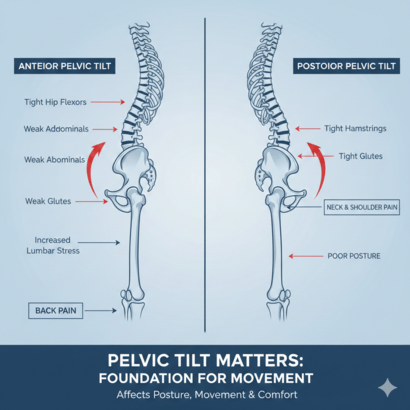

Anterior and posterior pelvic tilt is a common but often misunderstood topic in posture, alignment, and pain management. While both conditions involve abnormal positioning of the pelvis, they differ significantly in appearance, muscle imbalances, symptoms, and corrective strategies. Understanding these differences is essential for effective hip misalignment correction and long-term relief from back, hip, and movement-related discomfort.
This guide breaks down the seven key differences between anterior and posterior pelvic tilt, explains how each develops, and outlines evidence-based strategies to correct them.
What Is Pelvic Tilt and Why Does It Matter
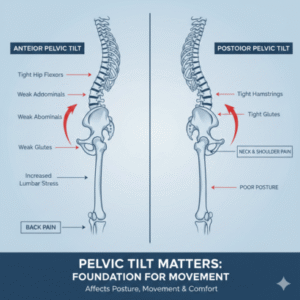
The pelvis serves as the structural base of the spine. Excessive forward or backwards tilting disrupts spinal curvature, modifies muscular equilibrium, and elevates stress on joints and soft tissues. This misalignment can lead to chronic pain, restricted mobility, and ineffective movement patterns over time.
The two most common postural deviations are anterior pelvic tilt (APT) and posterior pelvic tilt (PPT)—often compared as posterior pelvic tilt vs anterior pelvic tilt due to their opposing mechanics.
1. Direction of Pelvic Position
The most fundamental difference in anterior and posterior pelvic tilt is the direction of the pelvic shift.
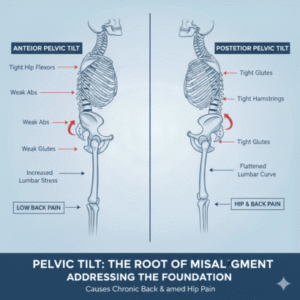
- Anterior pelvic tilt: The front of the pelvis rotates downward while the back rises.
- Posterior pelvic tilt: The front of the pelvis lifts upward while the back tucks underneath.
This directional change alters how the spine stacks over the pelvis and directly influences posture from the lower back to the neck.
2. Spinal Curve Changes
Pelvic position directly affects spinal curvature, which is why anterior and posterior pelvic tilt is closely linked to back pain.
- Anterior pelvic tilt increases the natural arch in the lower back (lumbar lordosis).
- Posterior pelvic tilt flattens or reduces the lumbar curve.
Excessive curvature can overload spinal joints, while a flattened spine may reduce shock absorption during movement.
3. Muscle Imbalances Involved
Muscle imbalance patterns differ significantly in posterior pelvic tilt vs anterior conditions.
Anterior Pelvic Tilt Muscle Pattern
- Tight: Hip flexors, quadriceps, lower back muscles
- Weak: Glutes, deep abdominals
Many people with an anterior pelvic tilt with tight hamstrings assume hamstrings are the primary issue, but they are often lengthened rather than truly flexible.
Posterior Pelvic Tilt Muscle Pattern
- Tight: Hamstrings, glutes, abdominals
- Weak: Hip flexors, spinal extensors
Corrective strategies must address these imbalances rather than focusing solely on stretching or strengthening in isolation.
4. Visual Appearance and Posture
The external posture differences help distinguish anterior and posterior pelvic tilt, especially in standing alignment.
- Anterior pelvic tilt symptoms often include:
- Protruding abdomen
- Increased lower back arch
- Hips appear tilted forward
- Posterior pelvic tilt symptoms may consist of:
- Flattened lower back
- Tucked-under hips
- Slouched or rigid posture
Search trends such as before and after female anterior pelvic tilt reflect how visible these changes can be when posture improves.
5. Pain and Movement Limitations
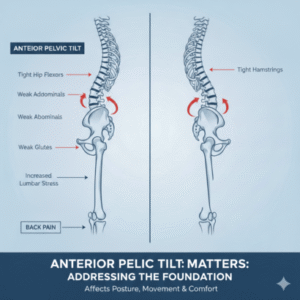
Pain presentation varies in anterior and posterior pelvic tilt.
- Anterior pelvic tilt is more commonly associated with:
- Lower back pain
- Hip flexor discomfort
- Reduced hip extension
- Posterior pelvic tilt often leads to:
- Hamstring tightness
- Limited spinal extension
- Hip stiffness during walking or running
Neither condition guarantees pain, but both increase injury risk if left uncorrected.
6. Daily Habits and Ergonomics
Lifestyle factors play a major role in both conditions.
- Prolonged sitting, poor workstation setup, and inactivity contribute heavily to anterior pelvic tilt. Using an ergonomic chair for anterior pelvic tilt that supports neutral pelvic positioning can reduce strain.
- Excessive slouching, over-bracing the core, or prolonged flexed sitting positions may encourage posterior pelvic tilt.
Awareness of daily posture is just as important as corrective exercise.
7. Correction Strategy Differences
The most important distinction in posterior pelvic tilt vs anterior pelvic tilt lies in how each is corrected.
How to Fix Anterior Pelvic Tilt
- Stretch hip flexors and quadriceps
- Strengthen glutes and deep core muscles.
- Reduce prolonged sitting and improve standing posture.
- Consider support tools such as an anterior pelvic tilt brace or anterior pelvic tilt back brace as temporary posture cues—not permanent fixes.
How to Fix Posterior Pelvic Tilt
- Stretch hamstrings and glutes
- Strengthen hip flexors and lumbar extensors.
- Avoid excessive posterior tucking during sitting and exercise.
- Incorporate targeted posterior pelvic tilt exercises and posterior pelvic tilt stretches.
Anterior and Posterior Pelvic Tilt Exercises
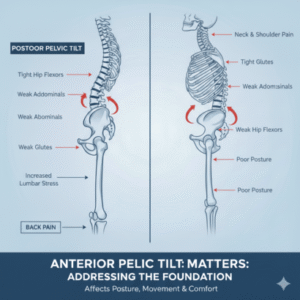
Corrective exercises must match the condition:
- Anterior pelvic tilt: Glute bridges, hip thrusts, dead bugs, lunges with posterior pelvic control.
- Exercises for posterior pelvic tilt: Hip flexor strengthening, back extensions, controlled pelvic tilt drills
Performing the wrong exercise emphasis can worsen the imbalance rather than improve the alignment.
Can Pelvic Tilt Cause Back Pain?
Yes. Both conditions alter spinal loading patterns. Anterior pelvic tilt often compresses the lower spine, while posterior pelvic tilt reduces the spine’s natural shock absorption. Over time, these changes can contribute to disc stress, joint irritation, and muscle fatigue.
How Long Does It Take to Fix Anterior Pelvic Tilt?
A common question is how long it takes to fix anterior pelvic tilt or how long it takes to fix anterior pelvic tilt. The answer depends on severity, consistency, and lifestyle factors.
- Mild cases: noticeable improvement in 4–6 weeks
- Moderate cases: 8–12 weeks of consistent corrective work
- Long-standing cases: several months with habit changes
Posture correction is not instant—it requires repetition and daily awareness.
How to Correct Hip Misalignment Effectively
Whether dealing with anterior or posterior tilt, how to correct hip misalignment follows the same principles:
- Identify your pelvic position accurately
- Address muscle imbalances, not just pain
- Modify daily habits and sitting posture
- Stay consistent rather than aggressive
Sustainable hip misalignment correction focuses on long-term movement quality, not quick fixes.
Final Thoughts
Understanding anterior and posterior pelvic tilt is essential for choosing the right corrective approach. Although these conditions are opposites, they share one key truth: both are common, manageable, and highly responsive to targeted intervention.
By addressing posture, muscle balance, and daily habits together, you can restore neutral pelvic alignment, reduce pain, and improve overall movement efficiency—one small correction at a time.
Want to read more articles? Click here


Pingback: Knee Pain in Athletes: 4 Causes, Prevention, and Treatment - alignedliving.blog
Pingback: Can a Posture Corrector Really Improve Your Alignment in 30 days? - alignedliving.blog